Last updated November 20, 2026
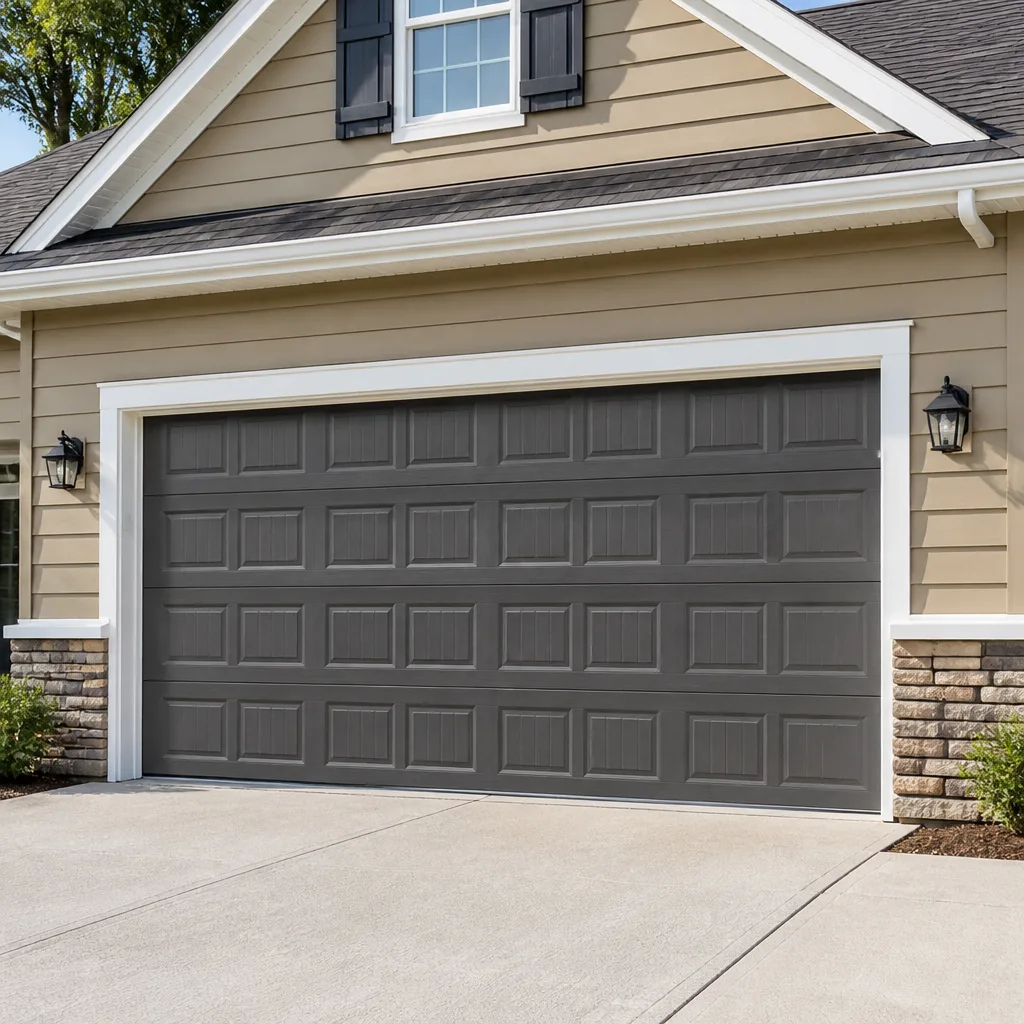 Raised-panel steel
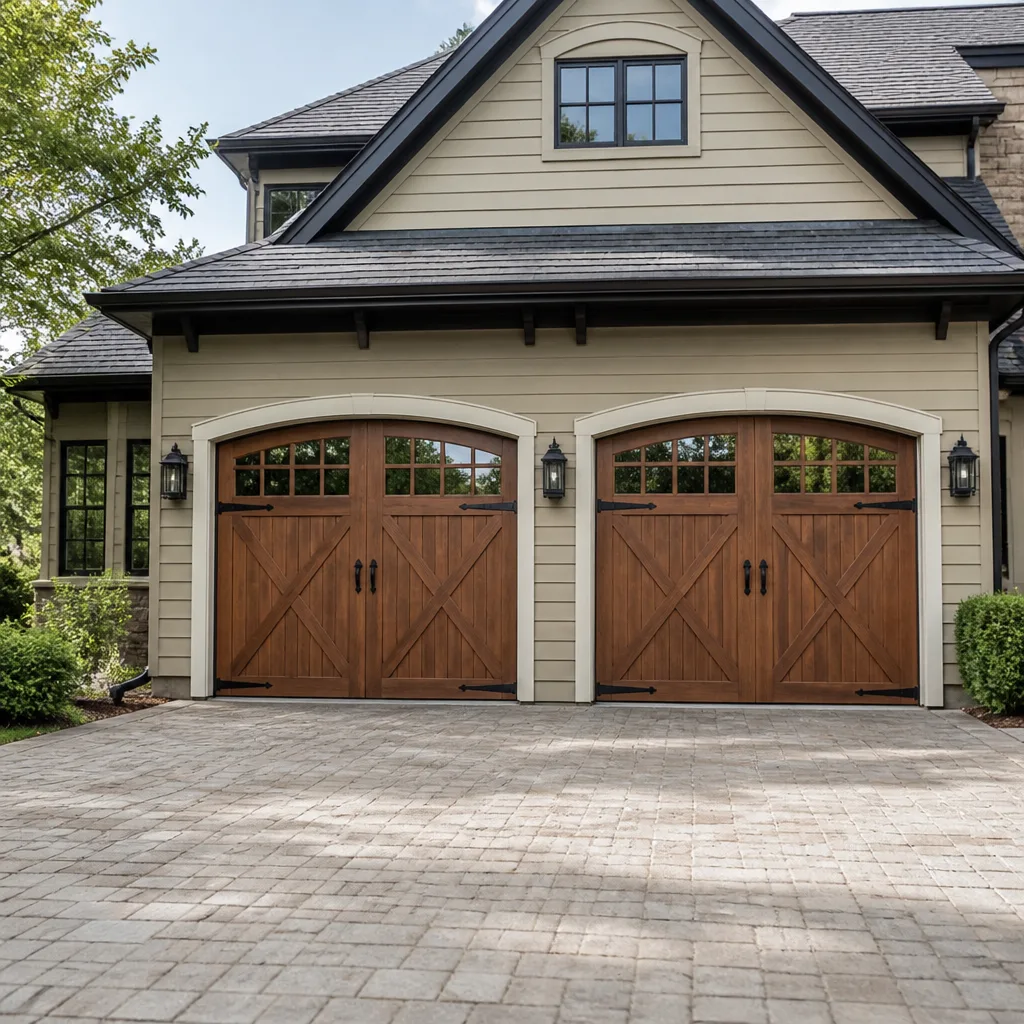 Carriage house
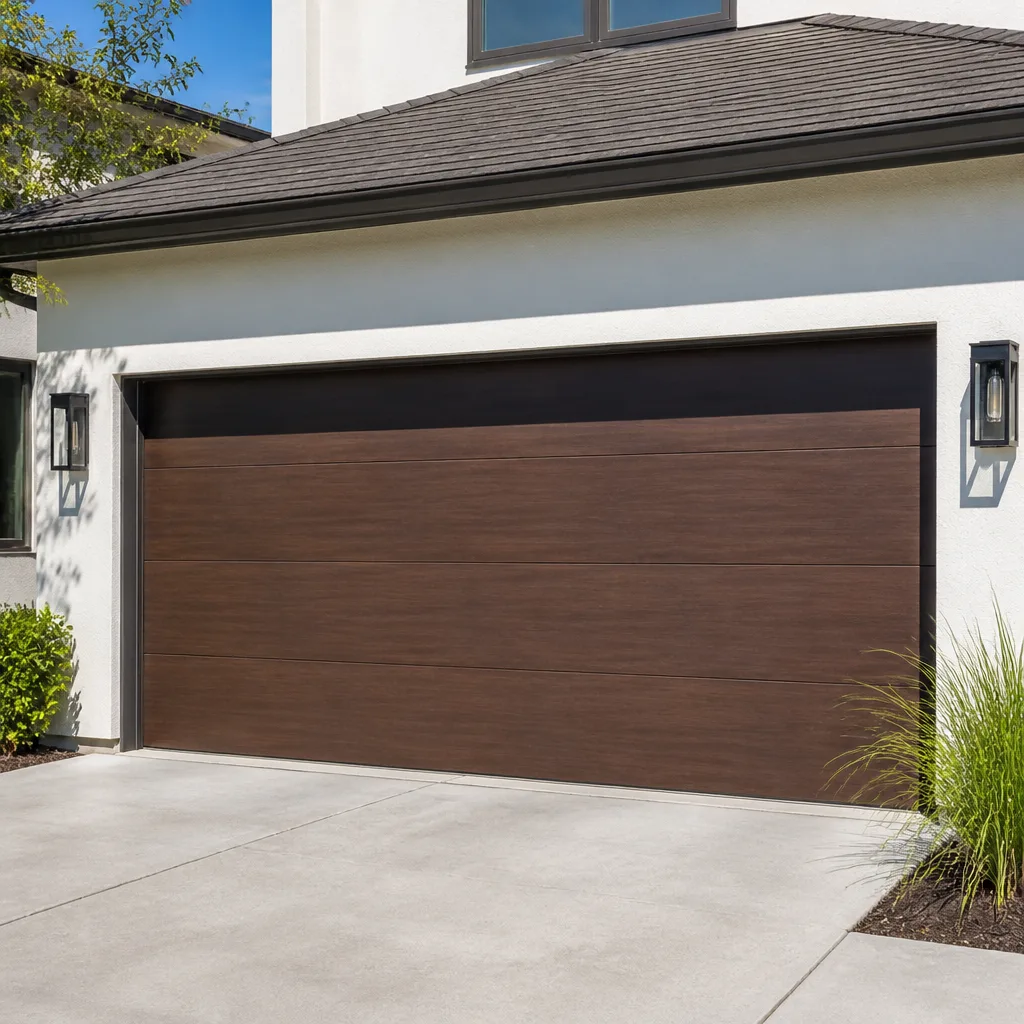 Modern flush
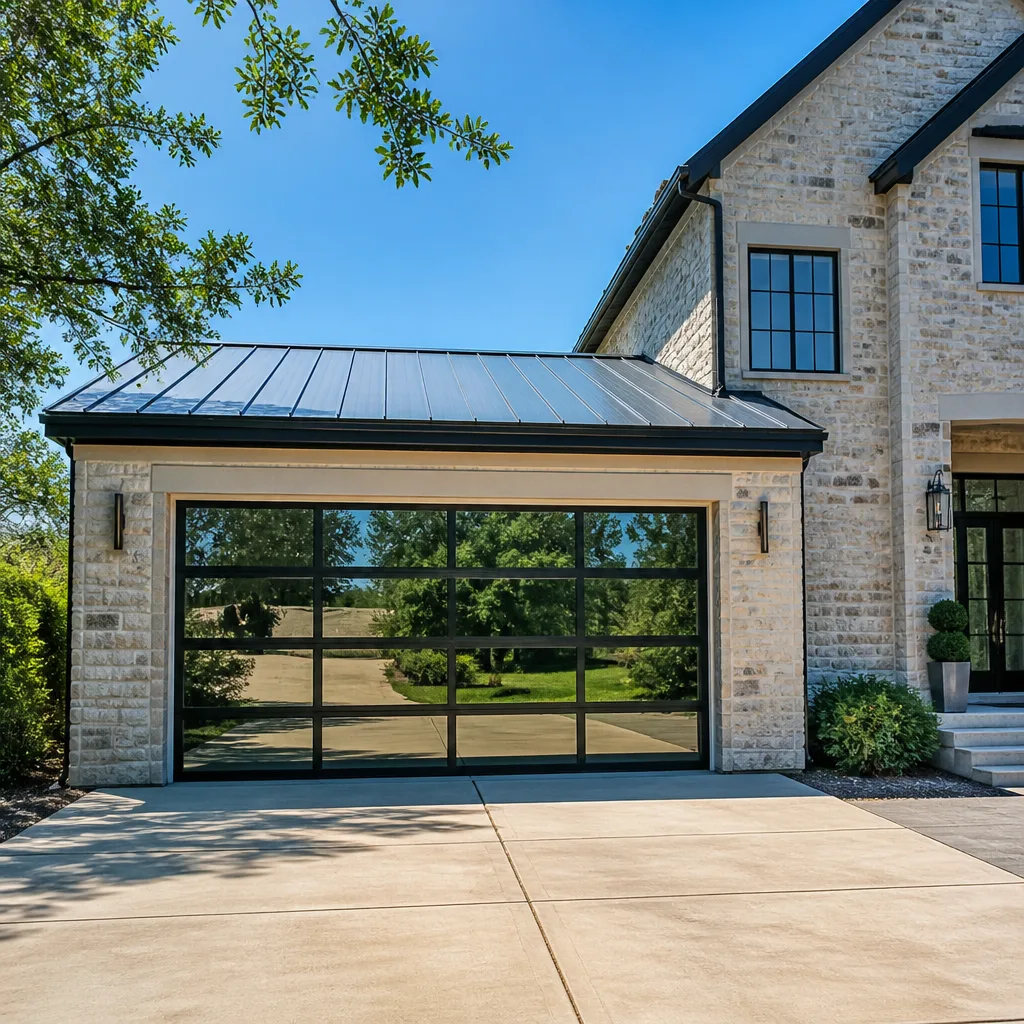 Full-view glass
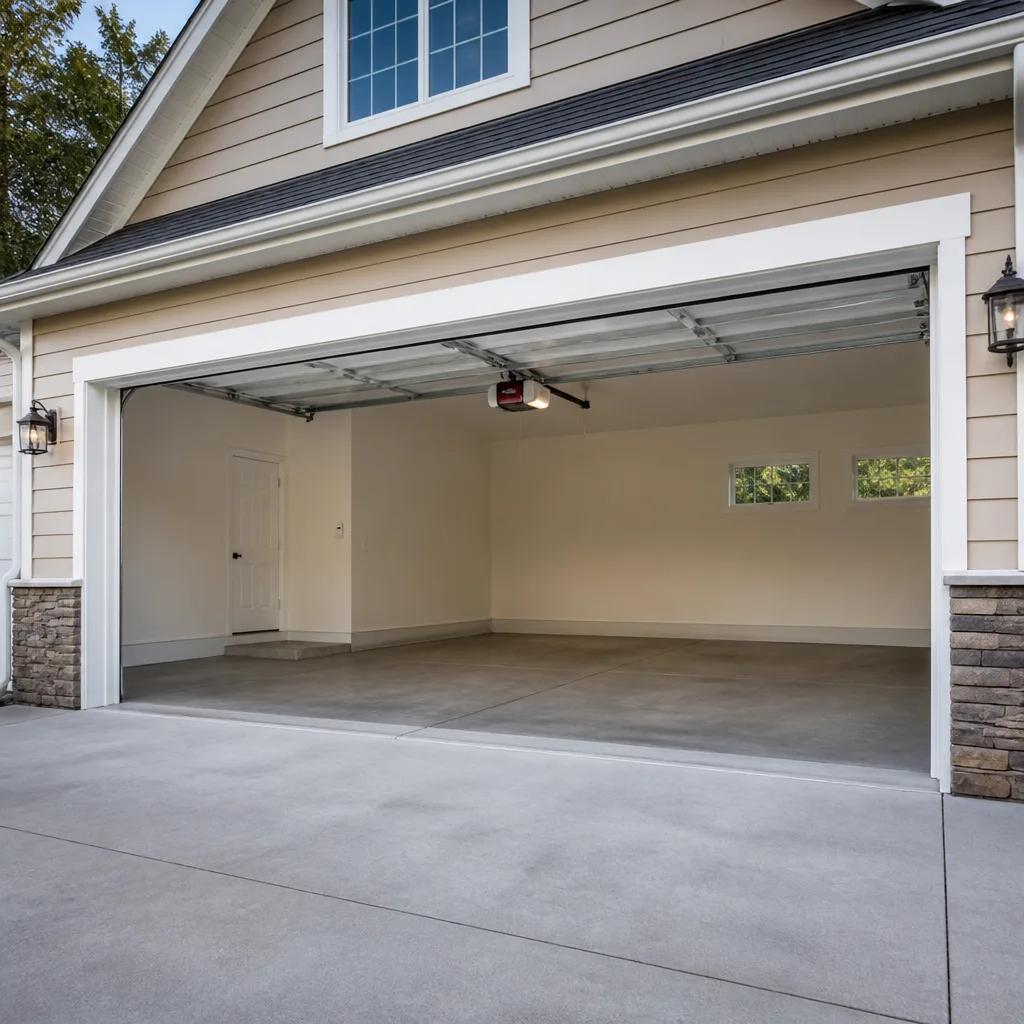 LiftMaster openers
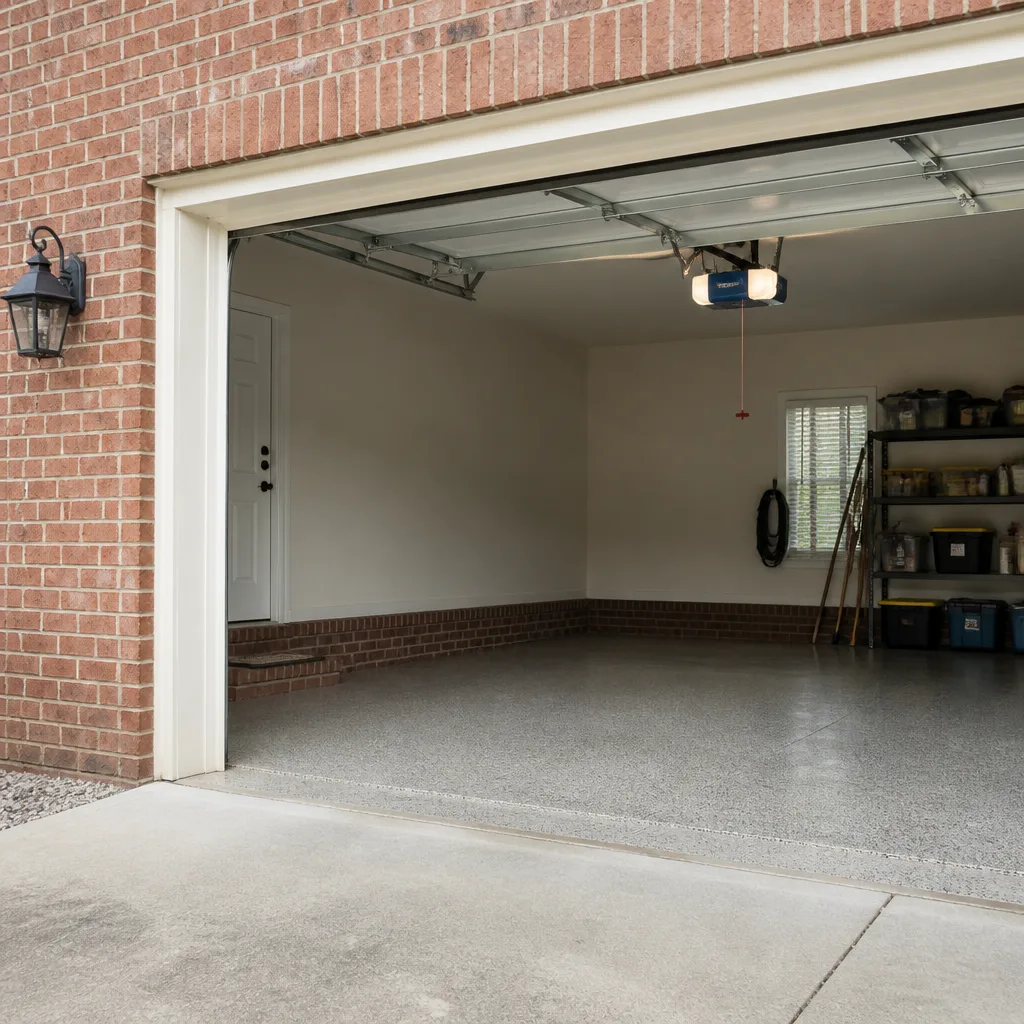 Chamberlain openers
Full 25-point door and opener safety check with every visit - springs, cables, rollers, tracks, and your LiftMaster or Chamberlain opener included
You get a price before we start. It does not change when the pro arrives.
Get your free estimateThe Complete Guide to Garage Doors in Eagle Creek
Most homeowners spend more time picking a garage door color than they do vetting the torsion spring setup behind it. That backwards priority is exactly why so many doors need emergency service within a few years of installation, long before the panels have aged at all. The color is the easy part. The hard part is understanding that your garage door is a system, and in Eagle Creek that system faces freeze-thaw swings, HOA rules, and soil movement that punish shortcuts. This guide walks you through the whole picture: springs, openers, tracks, panels, seals, local guidelines, and how to think about a ten-year plan instead of a today problem. By the end, you’ll know how to read your door as infrastructure, not an appliance.
Quick Answer
A garage door in Eagle Creek is best treated as a system of interdependent parts (springs, opener, tracks, panels, seals, and hardware) that must be matched to your door’s weight and to Indiana’s freeze-thaw climate. The most common and costly mistake is replacing only the part that broke instead of addressing the spring setup, track alignment, and seal condition together. Understanding brand-specific components and HOA rules before you buy or repair saves more over a decade than any single repair decision.
Styles & brands we work with
- Raised-panel steel
- Carriage house
- Modern flush
- Full-view glass
- LiftMaster openers
- Chamberlain openers
Table of Contents
- Why Your Garage Door Is Infrastructure, Not an Appliance
- How Indiana’s Freeze-Thaw Cycles Stress Your Door
- Torsion Springs: Standard Setup vs. What Heavy Doors Actually Need
- Reading the System Holistically: Opener, Springs, Tracks, Panels
- What Eagle Creek-Area HOA Guidelines Typically Restrict
- The “Replace Only What Broke” Trap Over Ten Years
- Brand Fluency: Why It Matters for Eagle Creek Homes
- A Practical Maintenance Rhythm for Eagle Creek Doors
Why Your Garage Door Is Infrastructure, Not an Appliance
An appliance sits in a corner and fails quietly. A garage door is the largest moving object in your house, it opens and closes thousands of times a year, and when it stops working the whole household adjusts around it. In Eagle Creek, where most homes rely on the garage as the main daily entry, a dead door means parking in the driveway, hauling groceries through the front, and a security gap you can’t ignore. That’s infrastructure.
The appliance mindset shows up in small decisions. You pick a door by appearance, you replace a spring with whatever’s in stock, you ignore a track that’s been rubbing for a season. Each choice seems minor. Stacked together over a few years, they’re why doors fail early and why repair bills climb. When you treat the door as a system that lives in a specific climate and a specific neighborhood, the decisions get easier and cheaper.
Here’s what changes when you switch mindset:
- You match spring capacity to door weight, not to whatever the last installer grabbed.
- You inspect tracks and seals on a schedule instead of waiting for a symptom.
- You choose openers that pair cleanly with the door’s size and your use pattern.
- You factor in Eagle Creek’s seasonal swings when you think about materials and hardware.
That last point matters more than people expect, and it’s the next section.
How Indiana’s Freeze-Thaw Cycles Stress Your Door
Indiana’s climate does something to garage doors that milder regions simply don’t. It freezes, thaws, refreezes, and repeats, often within a single week in late winter and early spring. Every one of those cycles moves moisture into places it doesn’t belong, then expands it, then lets it drain, then does it again. The parts that suffer most are the ones you don’t look at.
Bottom seals take the worst of it. A rubber or vinyl seal that sits on a wet slab, freezes to it overnight, and gets torn loose when the door lifts is a seal that’s quietly failing. Tracks collect grit and moisture, and the combination of frost and debris makes rollers drag. Hinge plates and fasteners loosen as the door flexes with temperature. None of this announces itself. It shows up later as a door that’s suddenly noisy, misaligned, or stuck partway.
What freeze-thaw exposure looks like in practice:
- Seals lift and crack at the contact edge. The seal no longer meets the slab evenly, which lets cold air and, in spring, rainwater in.
- Tracks shift out of plumb. Frost heave and soil movement nudge track alignment, and the door starts binding.
- Hardware loosens. Repeated expansion and contraction work bolts and screws loose over a season.
- Rollers flatten or seize. Cold stiffens bearings; grit then finishes the job.
Eagle Creek sits in this pattern same as the rest of central Indiana, and homes near older developed areas often deal with slab settling that compounds the moisture problem. A door that was fine in October can start dragging by February. Catching the seal and track condition before winter and again in early spring is the single most useful habit for a door in this climate. When the binding gets beyond adjustment, that’s usually a sign to have the mechanism looked at directly, which is what our garage door repair work covers.
Torsion Springs: Standard Setup vs. What Heavy Doors Actually Need
Here’s where the color-picking versus spring-vetting imbalance really bites. A standard residential torsion setup is engineered for a standard door weight. Many Eagle Creek homes have upgraded to heavier insulated doors for energy reasons, and heavier doors need springs with different wire gauge and cycle ratings than the standard pair. When the springs don’t match the door’s actual weight, the door strains the opener, the opener strains the springs, and both wear out early.
We can’t overstate the safety side of this. Torsion springs are under extreme tension. Winding or unwinding one without the right tools and technique can cause serious injury, and this is not a job to attempt yourself. What you can do is understand the setup so you recognize when something is wrong and describe it accurately when you call.
What to look for without touching anything:
- A single spring on a wide or insulated door. Some setups genuinely call for a matched pair; one spring on a heavy door is a red flag.
- Visible gaps in the coils. A spring that’s lost tension or snapped will show a clear separation.
- A door that feels heavy on manual release. A properly balanced door lifts with modest effort; if it drops or resists, spring tension is off.
- Uneven opening. One side lagging usually points to spring or cable imbalance.
A matched pair is typically replaced together because the two springs have shared the cycling load. Replacing one and leaving the other means the new spring takes on double duty and the old one is on borrowed time. If your door’s springs have failed, spring repair done safely is a same-trip job with the right spring on hand, and it’s one of the services we handle as a dedicated specialty rather than an afterthought.
Reading the System Holistically: Opener, Springs, Tracks, Panels
Treating each part as a separate purchase is how homeowners end up guessing. The opener, springs, tracks, and panels are interdependent, and a problem in one shows up as a symptom in another. A dragging door that feels heavy is wearing out the opener. A misaligned track is throwing the panels off level. A weak spring forces the opener to work harder. Read the whole system and the diagnosis gets clearer.
Start with the door itself on manual release. Lift it by hand. If it’s heavy or binds, the issue is mechanical (springs, tracks, rollers) and the opener’s behavior is a symptom, not the cause. If the door moves smoothly by hand but the opener strains, the opener or its settings are the issue. That one test separates most problems.
Then work through the system in order:
- Balance check. Door moves freely by hand at the halfway point.
- Spring condition. No gaps, matched tension, correct capacity for the door weight.
- Track alignment. Tracks plumb and parallel, no dents or debris, rollers running clean.
- Panel condition. Panels level and aligned, no cracked sections straining the hinges.
- Opener performance. Travel limits and force settings correct, safety reverse working.
- Seal and weatherstripping. Solid contact with the slab and jambs.
Eagle Creek’s climate makes the opener side especially worth watching: a door that binds in the cold drags the opener every time, and openers compensate by pushing harder, which shortens their life. When the opener itself is the problem, that’s a separate specialty, and you can read about our garage door opener repair work covering the electronics and drive systems. If you’re weighing a full door replacement after this walkthrough, garage door installation covers how a system gets matched from scratch.
What Eagle Creek-Area HOA Guidelines Typically Restrict
If you live in one of the Eagle Creek-area neighborhoods with an HOA, the door you want and the door you’re allowed to install aren’t always the same. HOAs in this region commonly focus on visual consistency, and that affects style and material choices in ways worth checking before you buy. The restrictions vary by community, so the specific answer lives in your own association’s documents. What tends to come up:
- Allowed door styles. Many associations limit choices to panel styles that match the neighborhood’s original look, ruling out certain carriage-house or full-view glass designs.
- Color palettes. Specific colors are often approved, with changes requiring sign-off.
- Materials and finishes. Steel and certain wood-look formulations may be preferred or restricted based on the community.
- Window placement. Window rows or decorative hardware sometimes need to match the pattern already on the street.
- Approval process. Many require a submission with manufacturer and model before installation.
This is where brand fluency saves headaches. When you know the manufacturer and model lineup, you can bring a specific option to your HOA and get a yes or no quickly, rather than submitting a vague idea and waiting on a round trip. It’s worth pulling your association’s architectural guidelines before you even start shopping, and it’s worth confirming that whatever door you choose meets the community standard, not just your taste.
The “Replace Only What Broke” Trap Over Ten Years
The replace-only-what-broke approach feels thrifty in the moment. Over a decade, it usually costs more than a planned approach, and the reason is straightforward: each emergency repair is priced as a disruption, and the underlying causes never get addressed. You pay to fix the symptom, the cause keeps working, and you fix the next symptom a few seasons later.
Think about how the two approaches play out:
- Reactive approach. Spring snaps, you replace it. Opener strains against a binding door, you replace the opener. Track keeps shifting with the seasons, you adjust it every year. Each fix is separate, and none of them talk to each other.
- Planned approach. You address the spring capacity and door balance together, align the tracks and replace worn rollers at the same time, keep the seal in shape, and service the opener to match. Fewer trips, fewer surprises, a door that runs quietly through the seasons.
The planned approach also protects the expensive stuff. A door that’s balanced and running true doesn’t wear out its opener early. A seal that’s maintained doesn’t let moisture into the tracks and hinges. Panels that aren’t binding don’t crack at the hinges. Each improvement compounds.
None of this means replacing parts you don’t need to. It means fixing the cause when you fix the symptom, and doing the small things on a rhythm instead of waiting for them to become big things. That’s the whole game with a door in Eagle Creek’s climate.
Brand Fluency: Why It Matters for Eagle Creek Homes
Garage door systems are not interchangeable, and a technician who doesn’t know your brand is guessing. Spring wire gauges, opener drive systems, track profiles, and panel dimensions differ across manufacturers, and the right replacement part depends on knowing exactly which system you have. Generic fixes on a brand you don’t know are how the wrong spring size ends up on a heavy door and how an opener gets misdiagnosed as the problem when it’s really the door.
We work on your brand across the major systems installed in Eagle Creek homes, including LiftMaster, Chamberlain, Genie, Raynor, and the others in the mainstream field. That fluency means one call, one visit, the right part, and the right fix, with no waiting on an order for a component we can source directly. That parts availability is a service in itself: when the correct component is on hand, the door gets fixed the same trip instead of a second appointment later.
What brand fluency buys you:
- Accurate diagnosis on the first visit, because the technician recognizes the system.
- Correct-capacity springs matched to the door, not a generic assumption.
- Openers diagnosed by their own logic (LiftMaster, Chamberlain, Genie, and Craftsman all have their own quirks).
- Parts sourced and supplied directly, so you aren’t told to wait on an order.
- Repair, opener service, spring work, and full installation from one specialist.
If your door is a brand you can’t identify from the label, that’s fine. A technician can read the system and match it. The point is that brand-specific knowledge is what turns a guess into a fix. For the master overview of everything we do across the full lifecycle, start at our Garage Door Repair Eagle Creek home base.
A Practical Maintenance Rhythm for Eagle Creek Doors
The rhythm that works for a door in this climate is simple and repeatable. Two checks a year, one before winter and one in spring, will catch most of what freeze-thaw cycles throw at your hardware. You do the visual and the by-hand checks; the springs and internal mechanism get a professional inspection.
A year of care, in order:
- Before winter: check the bottom seal for gaps or freeze damage, clear debris from the tracks, tighten any visibly loose hinge bolts, and test the safety reverse.
- Monthly in cold months: run the door and listen. Grinding, popping, or a door that stalls partway means stop and call.
- Early spring: after the last hard freeze, recheck track alignment and the seal contact line, and look for panels that have shifted level.
- Mid-year: a by-hand balance check on manual release, plus a look at spring condition without touching.
- Annually: a professional inspection of springs, cables, rollers, and opener settings before the next winter sets in.
Keep lubricant off the tracks themselves (they’re meant to run dry) and let a professional handle anything involving the springs or cables. A rhythm like this is how a door gets a long, quiet run in Eagle Creek instead of a string of panic calls.
Common Mistakes to Avoid
- Choosing a door by color before checking spring capacity. A heavy insulated door on the wrong springs will wear out early and strain the opener, and it’s the decision most likely to cost you later.
- Replacing one spring of a matched pair. The pair has shared the load, so a lone replacement doubles its own work and leaves the old spring ready to fail.
- Ignoring the bottom seal through winter. A seal that freezes to the slab and tears loose lets cold air and spring moisture in, and it’s one of the cheapest things to fix early.
- Buying a new door without checking HOA rules first. Many Eagle Creek-area associations restrict style, color, and materials, so confirm the approval before you order.
- Attempting spring or cable work yourself. These parts are under extreme tension, and this is genuinely dangerous work that belongs with a trained professional.
- Diagnosing the opener when the door is the problem. A dragging door makes openers work harder; test the door by hand before replacing electronics.
- Treating each part as a separate purchase. Springs, tracks, opener, and seal are one system; fixing them together is how a door stays reliable through the seasons.
See the difference
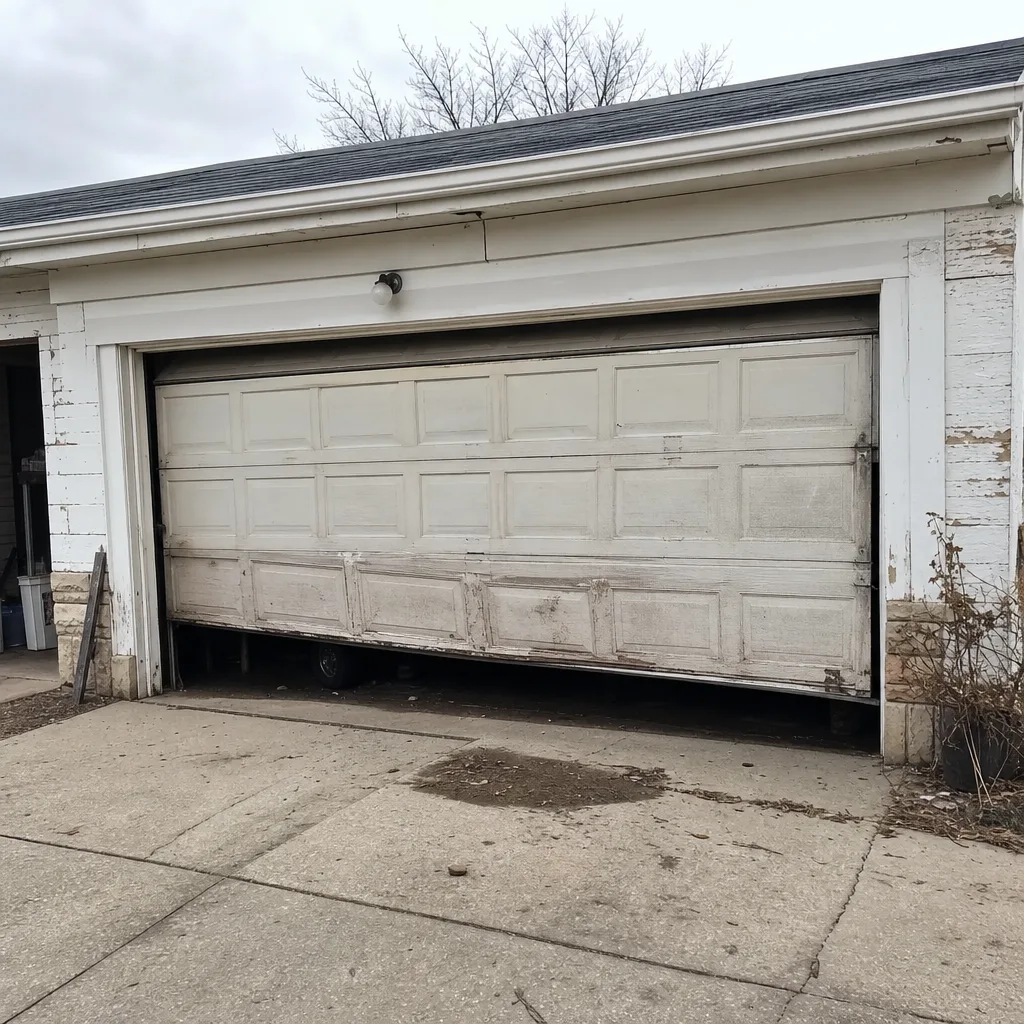 Before
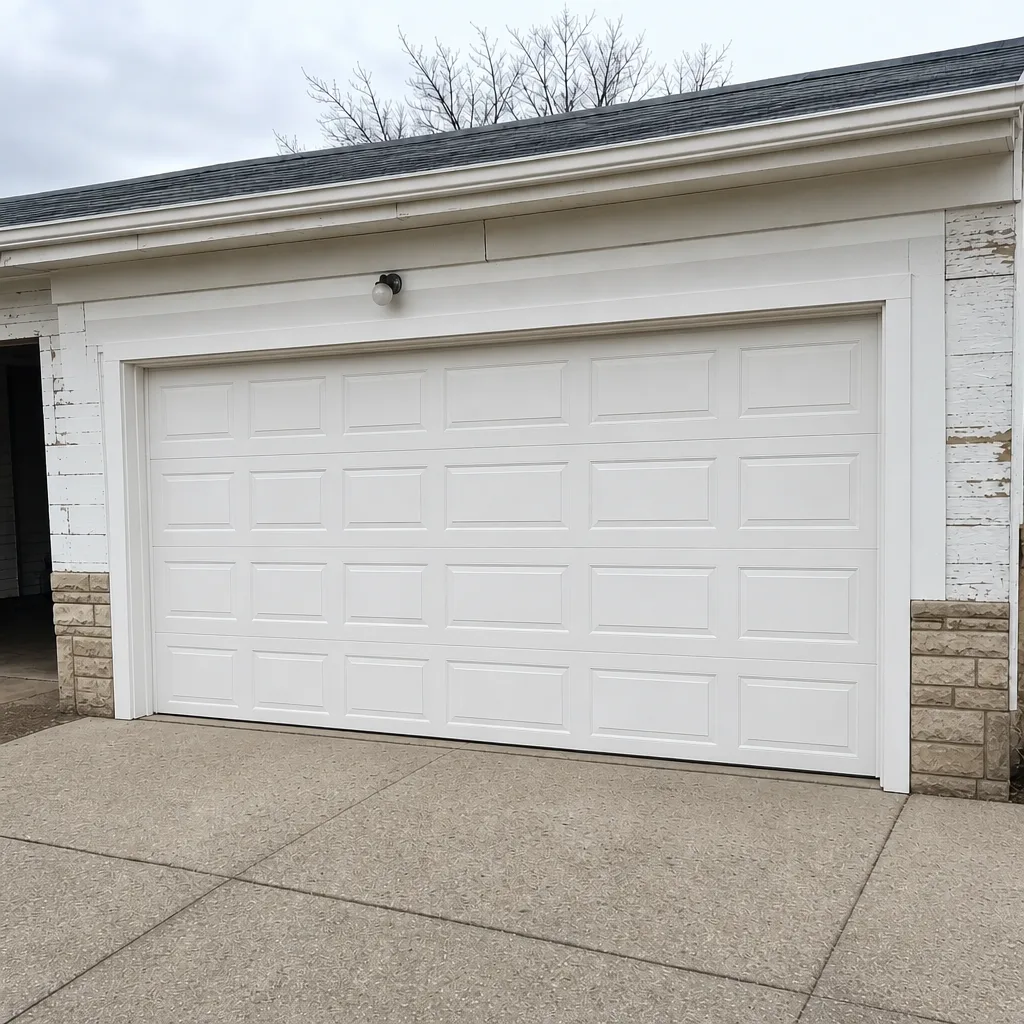 After
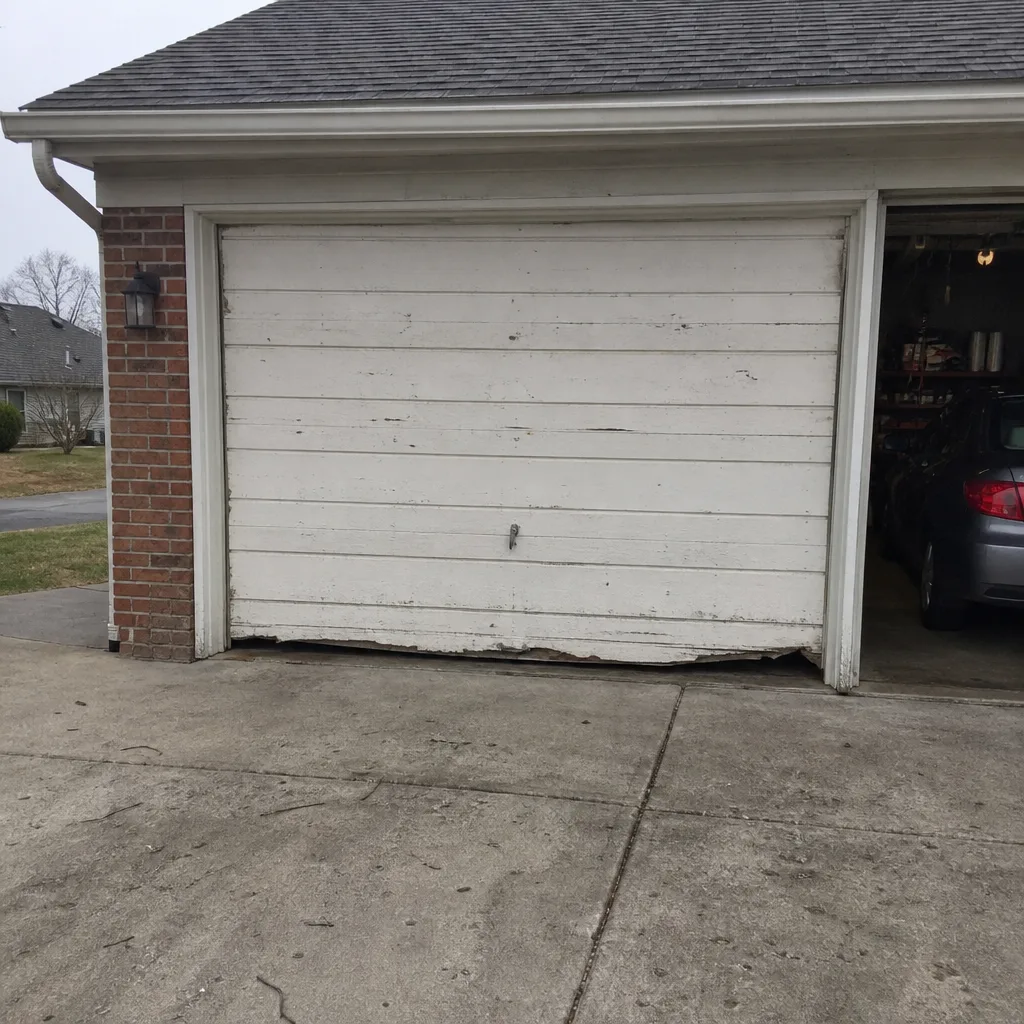 Before
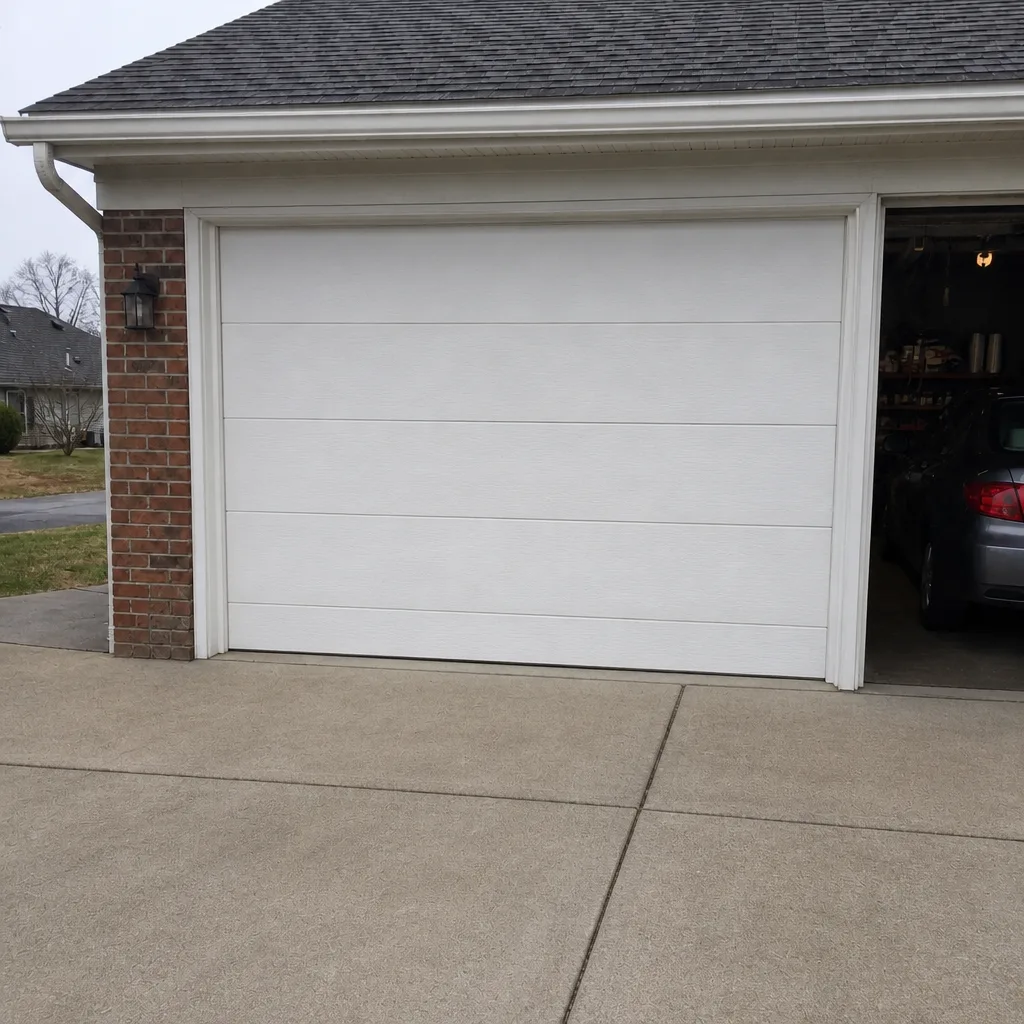 After
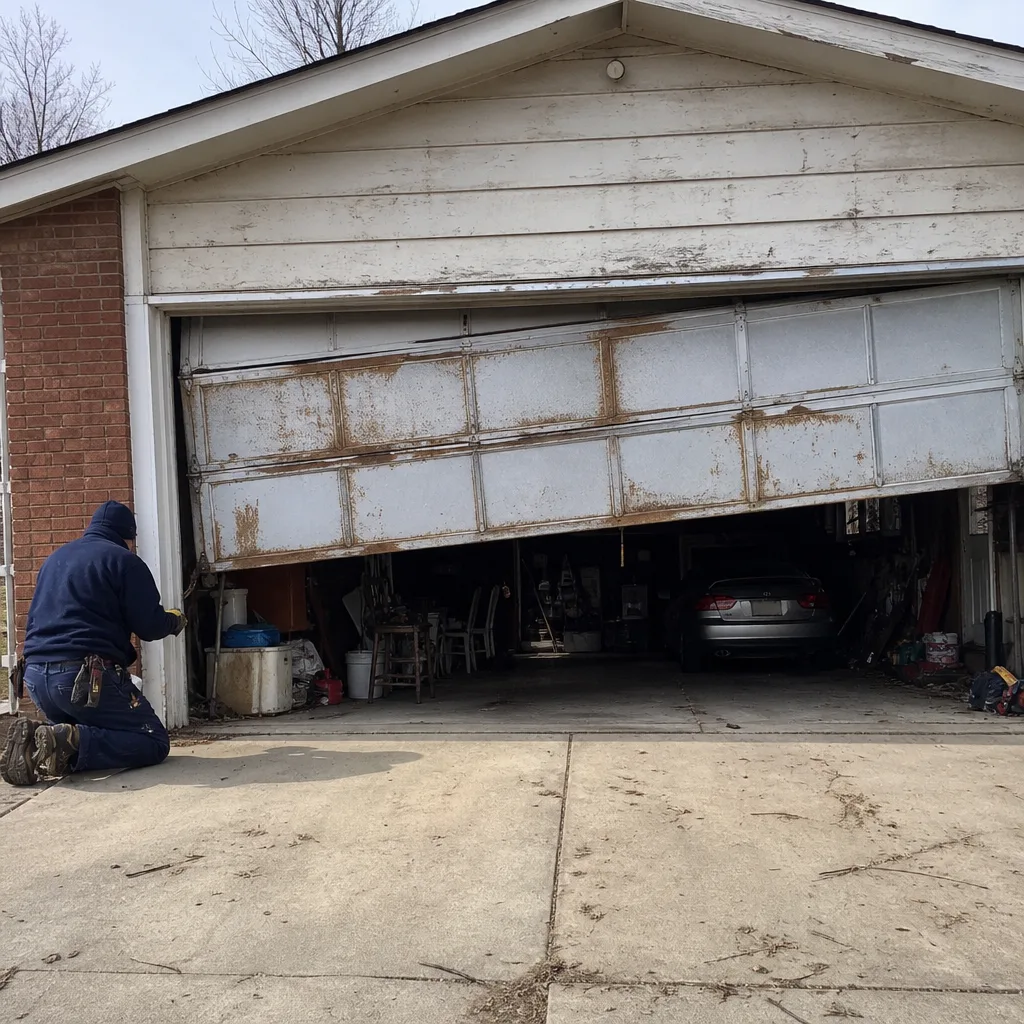 Before
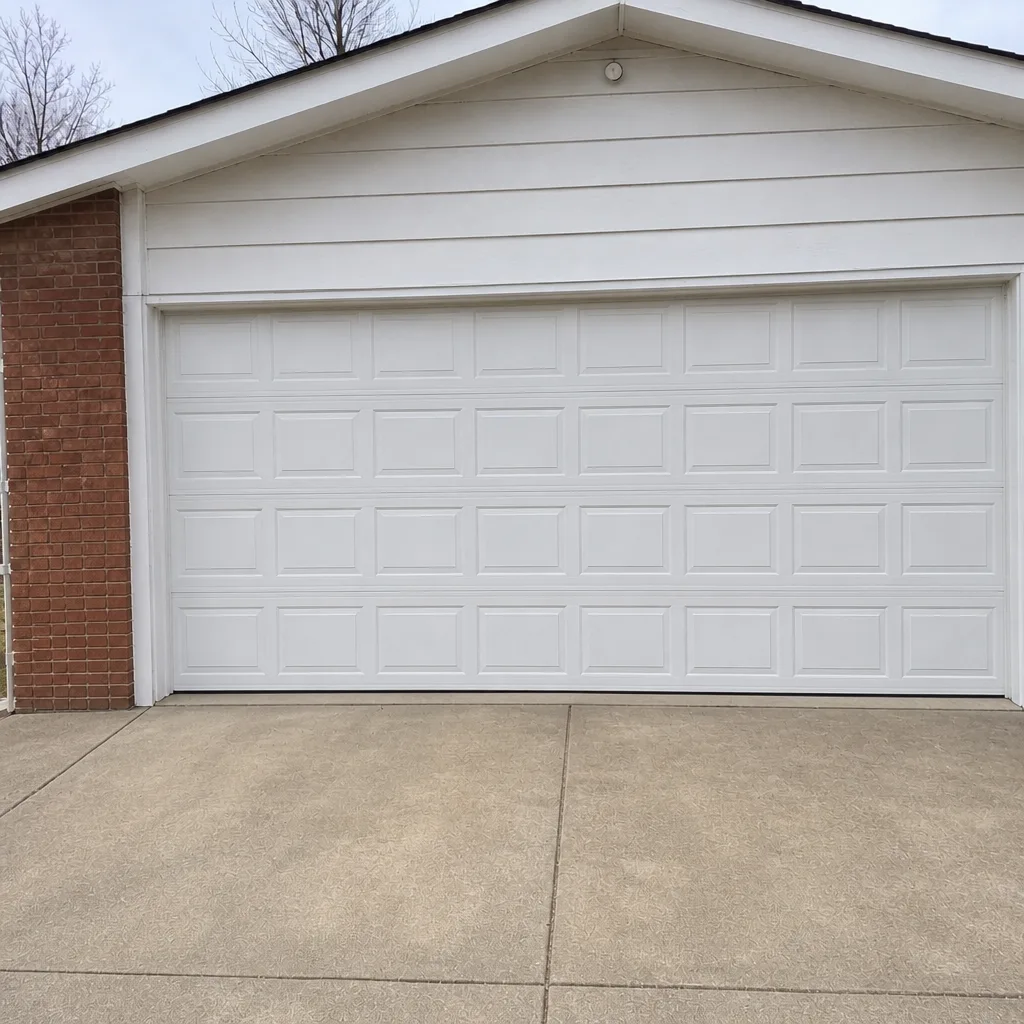 After
When to Call a Professional
Call a professional when the spring has snapped or lost tension (do not touch it), when the door binds, drops, or hangs unevenly, when the opener strains, reverses oddly, or stops responding, and when tracks have shifted after a hard freeze. Cables and any part under extreme tension are always a professional job. Panels that have cracked or pulled loose at the hinges, a seal that no longer meets the slab, and persistent noise from the mechanism are also worth a look before they compound. If you’re planning a replacement, a professional measure and a written price will save you from the wrong-sized door. Garage Door Repair Eagle Creek offers free estimates in Eagle Creek, and our technicians have up to 15 years of experience. Call (844) 935-1938.
Frequently Asked Questions
Spring repair in this market typically runs in the range of a few hundred dollars for a single spring, with a matched pair costing roughly double because both are replaced together. The written estimate sets the final price, and the price is quoted and agreed before any work starts. Call (844) 935-1938 for an exact quote; estimates are free.
It’s not the right move when the two springs are a matched pair, because they’ve shared the cycling load and one may already be near the end of its life. Replacing only the broken spring makes the new one carry double duty. A trained professional will check both and recommend the correct fix.
Yes, torsion springs and cables are under extreme tension, and winding or unwinding one without the right tools and technique can cause serious injury. This is work for a trained professional. You can safely check for visible coil gaps and test the door’s balance on manual release, but leave the spring itself alone.
Freeze-thaw cycles move moisture into seals, tracks, and hardware, then expand and drain it repeatedly. That loosens hinges, stiffens rollers, and shifts track alignment, so doors that run smoothly in fall start binding by midwinter. A pre-winter seal and track check catches most of it before it becomes a repair.
It can, yes. Many area associations restrict style, color palette, materials, and window patterns, and some require a submission with manufacturer and model before installation. Check your community’s architectural guidelines before you shop, and bring a specific brand and model to get a clear answer.
Repair the parts when the panels and structure are sound and the issue is springs, tracks, rollers, or the opener. Replace when panels are cracked or the door no longer matches its system and neighborhood rules, or when the cumulative repair cost outpaces a planned replacement. A professional inspection will tell you which path makes sense.
The Bottom Line
Your garage door is infrastructure, and in Eagle Creek that means treating springs, tracks, seals, panels, and the opener as one system shaped by freeze-thaw cycles and HOA rules. Match spring capacity to the door’s actual weight, replace matched pairs together, keep the bottom seal and tracks on a two-check yearly rhythm, and fix causes instead of symptoms. Over ten years, that planned approach costs less than a string of emergencies, and it keeps the door quiet through the seasons. Pick the color last. Know your setup first. When you’re ready for a professional look, we’re one call away at (844) 935-1938.
Written by the team at Garage Door Repair Eagle Creek.